
Multiple sclerosis and sensory changes in the feet can affect everyday comfort, walking and balance. Numbness, tingling or a burning feeling may make familiar activities feel different, from putting on shoes to walking across uneven ground.
For people living with MS in Limerick, Charleville and surrounding areas, understanding these symptoms is a useful first step towards getting the right support.
This guide from Don Kelly Physiotherapy and Acupuncture explains why sensory changes happen, when to seek medical advice and how physiotherapy may support mobility alongside your MS care.
Why can MS affect feeling in your feet?
MS affects the brain and spinal cord. The immune system damages myelin, the protective covering around nerve fibres. This can disrupt messages travelling between the body and brain.
When pathways involved in sensation are affected, your feet may feel numb, unusually sensitive or painful. Symptoms depend on where damage occurs. They do not always begin in the feet, and they can affect other parts of the body.
Numbness or tingling in your feet does not automatically mean you have MS. These symptoms have several possible causes, so new or unexplained changes need medical assessment.
MS and sensory changes in the feet: common symptoms
People describe these sensations in different ways:
- Numbness: reduced feeling, or a sensation of walking on padding.
- Pins and needles: tingling, prickling or buzzing.
- Burning or shooting pain: discomfort that may occur without an obvious injury.
- Sensitivity to touch: socks or bedding may feel uncomfortable or painful.
- Changes in temperature sensation: difficlty judging whether something is hot or cold.
Symptoms may come and go or remain for longer periods. Tell your GP or MS team if they are new, worsening or disturbing your sleep.
MS and sensory changes in the feet: effects on balance
Your brain uses information from your eyes, inner ears, muscles and joints to help you stay balanced.
If MS affects your awareness of where your feet are, placing each step may feel less certain. This sense of body position is called proprioception. Reduced feedback can make uneven ground or poorly lit spaces more challenging.
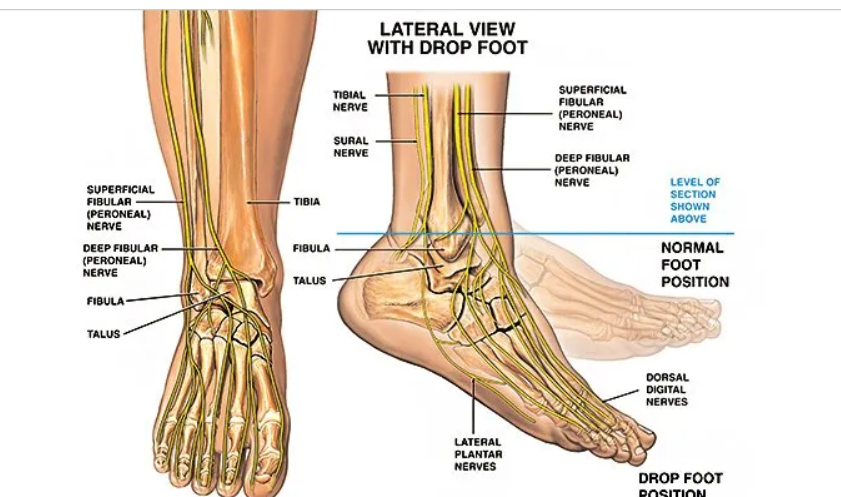
Weakness, muscle stiffness and foot drop can add to walking difficulties. Foot drop means difficulty lifting the front of your foot, which can cause your toes to catch the ground. It is a movement problem rather than a sensory symptom, although both can occur together.
Why do MS symptoms sometimes feel worse?
Heat can temporarily worsen existing MS symptoms in some people. A warm room, hot bath, fever or getting overheated during activity may make tingling, weakness or unsteadiness more noticeable. This is called Uhthoff’s phenomenon.
Heat-related worsening usually eases as body temperature returns to normal. It does not, by itself, mean new nerve damage has occurred.
However, do not assume every change is caused by heat or tiredness. Contact your MS nurse, neurologist or GP about new symptoms or a significant change in your usual pattern.
How physiotherapy can support mobility with MS
Physiotherapy may help manage the effects of MS on movement and everyday function. It does not cure MS or guarantee that normal sensation will return.
An assessment can explore walking, balance, strength, joint movement and how fatigue affects activity. Depending on your needs, a programme may include:
- Balance exercises adapted to your ability and safety.
- Strengthening exercises to support standing and walking.
- Walking practice to address specific movement difficulties.
- Mobility exercises for stiff muscles and joints.
- Pacing advice to help balance activity with rest.
Some people need a neurological physiotherapist or a wider rehabilitation team. Your GP, neurologist or MS nurse can advise on an appropriate referral.
What about foot drop?
A specialist assessment can help determine whether exercises, an ankle-foot orthosis or functional electrical stimulation may be appropriate.
An ankle-foot orthosis is a brace that supports the foot and ankle. Functional electrical stimulation uses electrical pulses to help lift the foot during walking. These options need individual assessment and are not suitable for everyone.
Practical ways to look after your feet
Reduced sensation can make it harder to notice pressure or skin injuries.
- Check your feet regularly for blisters, cuts or redness.
- Choose well-fitting shoes and check inside them for anything that could rub.
- Avoid direct heat from hot water bottles or heating pads on numb skin.
- Improve lighting and remove loose rugs or other trip hazards.
- Keep a brief record of symptoms and possible triggers to discuss with your healthcare team.
Ask your GP or podiatrist about wounds, skin changes or ongoing footwear problems. Painful burning or tingling may also need medical treatment; your GP or MS team can discuss suitable options.
When should you seek medical advice?
Arrange medical advice for new or unexplained numbness, worsening symptoms, repeated falls or increasing difficulty walking. If you already have MS, report changes to your MS team rather than assuming they are part of your usual symptoms.
Call 112 or 999 immediately for sudden weakness or numbness on one side, facial drooping or difficulty speaking. These can be stroke symptoms, even in someone who has MS.
New loss of bladder or bowel control, difficulty passing urine, or numbness around the groin needs urgent medical assessment, particularly with back pain or leg weakness.
Physiotherapy in Limerick and Charleville
If changes in walking, stiffness or balance are affecting your daily routine, contact Don Kelly Physiotherapy and Acupuncture to discuss your needs and whether an appointment is appropriate.
Physiotherapy should complement the care provided by your GP and MS team. Specialist neurological rehabilitation may be needed depending on your symptoms.
- Physiotherapy in Dooradoyle, Limerick — 8 The Stables, Huntsfield, Dooradoyle.
- Physiotherapy in Charleville, Co. Cork — Unit 2 Tahilla House, Balls Lane.
Call 086 323 9194 or contact the clinic to enquire.
For further information and support in Ireland, visit MS Ireland.
Frequently asked questions
Can MS cause numbness and tingling in the feet?
Yes. MS can disrupt sensory pathways in the brain and spinal cord. However, these symptoms can have other causes and do not confirm an MS diagnosis.
Can physiotherapy restore feeling in numb feet?
Physiotherapy cannot promise to restore sensation. It may help with related difficulties such as reduced balance, weakness, stiffness and changes in walking.
Should I stop exercising if I have MS symptoms in my feet?
Exercise needs to suit your symptoms and abilities. Ask your healthcare team for guidance, especially if you have reduced sensation, foot drop or a risk of falling.