

Sciatica vs Bulging Disc: Why Proper Diagnosis Matters
Many people use the terms “sciatica” and “bulging disc” interchangeably, but they are not the same condition.
Understanding the difference is important because the correct diagnosis often determines the most effective treatment plan. At Don Kelly Physiotherapy & Acupuncture, we regularly see patients in Limerick and Charleville who have been told they have sciatica when the underlying cause may be a bulging disc—or vice versa.
Knowing the difference can help you receive the right treatment sooner and avoid unnecessary pain and frustration.
What Is Sciatica?
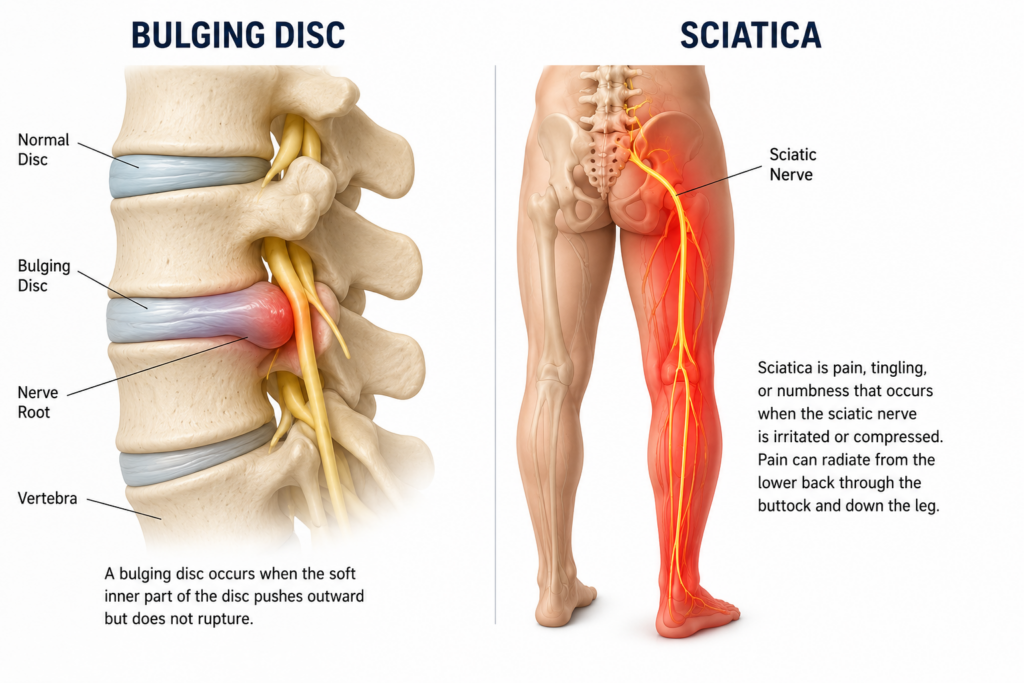
Sciatica is not a diagnosis. It is a collection of symptoms caused by irritation or compression of the sciatic nerve.
The sciatic nerve is the largest nerve in the body, running from the lower back through the buttocks and down each leg.
Common symptoms of sciatica include:
- Pain travelling from the lower back into the buttock and leg
- Tingling or pins and needles
- Numbness in the leg or foot
- Muscle weakness
- Pain that worsens when sitting
- Burning or shooting pain down the leg
Sciatica describes the symptoms you experience, but it does not explain what is causing them.
What Is a Bulging Disc?
A bulging disc occurs when one of the spinal discs extends beyond its normal boundary.
The discs in your spine act as cushions between the vertebrae. Over time, injury, repetitive strain, poor posture, or age-related changes can cause a disc to bulge outward.
A bulging disc may:
- Cause no symptoms at all
- Create lower back pain
- Compress nearby nerves
- Lead to leg pain and neurological symptoms
Importantly, many people have bulging discs visible on MRI scans but experience no pain whatsoever.
Can a Bulging Disc Cause Sciatica?
Yes.
A bulging disc is one of the most common causes of sciatica.
When the disc presses on or irritates a nerve root that contributes to the sciatic nerve, symptoms can develop down the leg.
However, a bulging disc is not the only cause of sciatica.
Other causes include:
✔ Piriformis syndrome
✔ Spinal joint dysfunction
✔ Spinal stenosis
✔ Muscle tightness
✔ Postural imbalances
✔ Biomechanical problems
✔ Degenerative spinal changes
This is why an accurate assessment is so important.
Why the Difference Matters
Many patients focus entirely on MRI findings.
However, treatment should focus on the person—not just the scan.
Research has shown that many people with no symptoms have disc bulges visible on imaging.
At the same time, some patients with severe sciatica symptoms may show only minor changes on MRI.
The key question is not simply:
“Do I have a bulging disc?”
The more important question is:
“Is this bulging disc responsible for my symptoms?”
A comprehensive physiotherapy assessment helps determine the true source of pain and guides treatment accordingly.
How Physiotherapy, Dry Needling and Custom Orthotics Helps
Treatment may include:
Physiotherapy
Targeted exercises help improve spinal mobility, reduce nerve irritation, and strengthen supporting muscles.
Acupuncture
Acupuncture may help reduce pain, decrease muscle tension, and improve recovery.
Dry Needling
Dry needling can help release tight muscles contributing to lower back and leg pain.
Manual Therapy
Hands-on treatment can improve joint mobility and reduce movement restrictions.
Custom Orthotics
Poor foot mechanics can sometimes contribute to postural imbalances that place additional stress on the lower back, hips, and lower limbs. Custom orthotics help improve alignment, support proper movement patterns, and may reduce biomechanical factors that contribute to sciatic nerve irritation.
Postural and Movement Assessment
Correcting movement patterns can help reduce stress on the spine and lower limbs while improving long-term outcomes.
When Should You Seek Treatment?
You should consider an assessment if you experience:
✔ Pain travelling down your leg
✔ Numbness or tingling
✔ Persistent lower back pain
✔ Difficulty walking or standing
✔ Symptoms that are worsening over time
Early intervention often leads to better outcomes and may help prevent symptoms from becoming chronic.
Sciatica and bulging discs are related, but they are not the same thing.
Sciatica refers to the symptoms caused by irritation of the sciatic nerve, while a bulging disc is one possible cause of those symptoms.
Understanding the difference is essential because effective treatment depends on identifying the true source of the problem.
If you are experiencing back pain, leg pain, numbness, or tingling, an accurate assessment can help determine the cause and guide the most appropriate treatment plan.
Take Back Your Mobility
Contact Don Kelly Physiotherapy and Acupuncture today to schedule a comprehensive assessment. Let’s get to the root of your sciatica and bulging disc to build a customized plan to get you moving comfortably again.